We read the product, not just the paperwork. From structure review through Shariah pronouncement to a certificate your counterparties can verify, across eight domains and nine regions.

The problem
A Shariah opinion is only as good as the examination behind it. An adviser who reads the term sheet can tell you whether the named contract is permissible. An adviser who reads the product can tell you whether the contract you named is the contract you are performing.
That distinction is where almost every finding we issue comes from. A deposit product whose profit calculation runs ahead of the underlying asset. A financing flow that books the sale before ownership transfers. A core banking system that posts a charge to income when the contract requires it to go to charity. None of it is visible in a document; all of it is visible in the system.
Contract named
Murabahah, ijarah, wakalah, or a hybrid
Ownership transfer timing
Whether it happens before the sale is booked
Fee sequencing
Charged for a service rendered, not for time given
Late payment treatment
Whether it enters revenue or goes to charity
What we do
Assessing a proposed product, fund or institution against the underlying Islamic contract at design stage, when a change of structure still costs a redesign rather than a rebuild.
A written pronouncement issued by a certified Mufti, in the form regulators, investors and partner banks ask for.
Issued under a reference any counterparty can check independently on our Verify Certificate page.
Policies, committee structures, reporting lines and manuals, including forming and supporting a Shariah board that conforms to your local regime.
Agreements, terms and conditions, product guidelines, offering documents, in-app disclosures and consent flows.
Continuous oversight as products ship, partners change and new markets open.
Coverage
Each links to a dedicated page covering the Shariah issues specific to that domain.
Products, financing and treasury structuring across licensed banks and windows.
Learn more →Sukuk, funds, screening and fund audit.
Learn more →Crowdfunding, blockchain, digital banking, robo-advisory, BNPL, SAFE-i.
Learn more →Fund certification, portfolio screening and founder-side structuring.
Learn more →Model structuring, product certification and takaful tech.
Learn more →Zakat, waqf, charity crowdfunding and microfinance.
Learn more →The business behind a halal product: financing, HR, accounts, zakat.
Learn more →Wasiyyah, faraid, hibah and the platforms that deliver them.
Learn more →Islamic AI and technology, and SAFE-i, sit within the fintech and venture domains and also have dedicated pages of their own.
Why ADL
Our team pairs certified Muftis holding AAOIFI qualifications with people who understand code, systems and product architecture. We hold Malaysia Digital Status from the Malaysian Digital Economy Corporation, a technology credential, held by a Shariah advisory firm. Where there is an app, we go into it. Where there is a core banking system, we review the configuration.
Registered Shariah Adviser with the Securities Commission Malaysia and with Labuan Financial Services Authority.
We work primarily against AAOIFI standards and reconcile with the applicable local regime. An opinion grounded in AAOIFI travels across borders.
Beyond applying Islamic finance standards, our team has been commissioned by a standard-setting body: research towards a governance standard, participation in the drafting of a preliminary standard, and a series of training assignments.
Auditing against another adviser's pronouncement is ordinary work for us, as is being audited by another firm. Independence is the point of the exercise.
We work in jurisdictions with mature Islamic finance regulation and in markets with none at all, where the structure has to satisfy Shariah while operating entirely within a conventional rulebook.
Best Shariah Advisory in Islamic Asset Management, presented in Jeddah in February 2026.
Members of our team hold Shariah board and committee seats across the institutions we serve, so our advisory work is informed by governance experience, not only by external review.
How we hold ourselves
Our measure of a good year is not only revenue. It is whether we helped one more business get to halal. That is why we will take a call from a founder at ideation stage, and why our pricing bends to what a client can actually carry. We would rather a small platform get its structure right at the start than be priced out and get it wrong at scale.
A business built on an Islamic label still has to be a good business. Sound fundamentals, capable people, honest disclosure, and a high standard of compliance with local regulation, because that is what protects the customer and the investor. Shariah compliance sits on top of that foundation. It is not a substitute for it, and we will say so if we see it being treated as one.
The Lifecycle
Compliance is a state you maintain rather than a certificate you obtain, and the audit cycle is how you maintain it.
We understand the product, fund or institution before we quote.
Scope, timeline and fee agreed, agreement signed.
The deep stage: the screens, the flows, the layered agreements, and the sequence a real transaction triggers them in.
Findings returned and worked through with your product, legal and engineering teams; the flow is adjusted.
Issued by a certified Mufti.
Issued under a reference any counterparty can verify independently.
For any product or institution the cycle runs for as long as it operates: the flow is re-tested every year, and every time it materially changes.
We commit to two to four weeks for a first pronouncement. In practice it often runs longer, and in our experience the reason is the round trip rather than the review. We raise amendments, and your product and engineering teams need time to work through them. We would rather set that expectation now than surprise you in week three.
Engagements are scoped and priced individually. We have worked with startups at ideation stage and with licensed institutions operating across several jurisdictions. One size does not fit all. Tell us what you are building and we will tell you what it takes.
Evidence
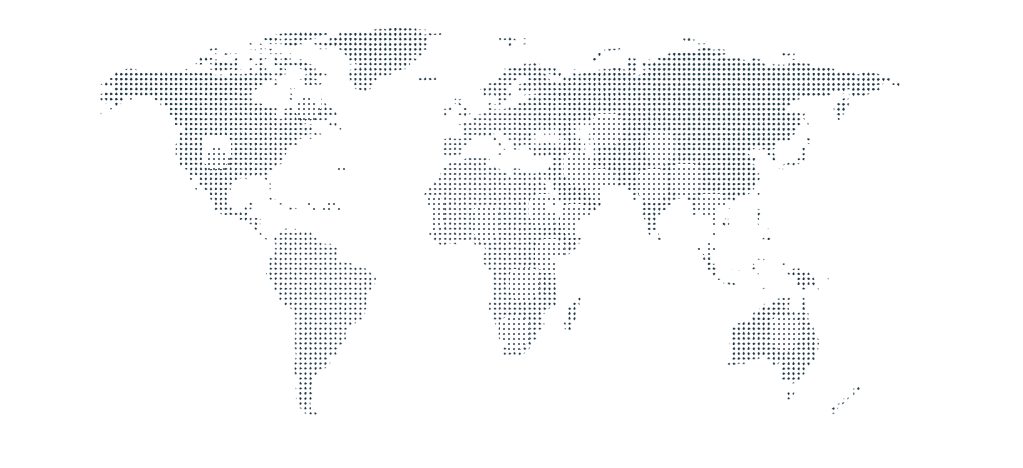
We have provided services across Southeast Asia, South Asia, Central Asia, the Middle East, West and Southern Africa, Oceania, North America and Europe, and for funds domiciled in the Caribbean and British Overseas Territories.
Questions
Advisory establishes that a product complies before it launches. Audit verifies that it still complies after it has been operating. They are two halves of one lifecycle, not two products, see the lifecycle above.
Yes, and often. A significant share of our work is in markets with no Islamic finance regime at all, where the structure has to satisfy Shariah while operating entirely within a conventional regulatory framework.
More than the documents. Where the product is an app or a platform, we go into how it works: the screens, the flows, and the sequence in which events fire. Where there are several parties and layered agreements, we ask for all of them and for the detail of each party. Reviewing the paperwork alone tells you what a product is supposed to do. It does not tell you what it does.
A pronouncement is the scholarly ruling, the reasoned opinion that a product, as described, complies. A certification is the instrument that evidences it, carrying a reference your counterparties can check. The pronouncement is the judgment; the certificate is the proof.
It varies by client. Some stay with us for ongoing advisory as they build; others come back for audit on specific products or at specific points. Both are normal, and we would rather set the arrangement to what you actually need than sell a retainer you do not.
Our certification confirms Shariah compliance. It is not an assessment of whether a business is viable, whether its financials are sound, or whether the people running it can execute. Look at both questions, and do your own due diligence on the second. Every ADL certificate carries a reference you can check independently.
Book a consultation before the structure is committed to. We will tell you at the first meeting whether it holds.