The Simple Agreement for Future Equity is the default instrument in early stage venture and it does not survive Shariah scrutiny. We built an alternative that does, and we model it to your terms rather than handing you a template. Pilots running now.

The problem
Since the SAFE was introduced in 2013 it has become the default way early stage startups raise money. Founders like it because it secures capital quickly, without fixing a valuation upfront and without the interest, maturity dates and repayment pressure of debt. Investors accept it because the valuation cap and the discount preserve their upside.
As Islamic startup ecosystems have grown across the Gulf, Malaysia, Indonesia and South Asia, the absence of a properly grounded Shariah-compliant equivalent has become hard to ignore. Muslim founders are too often left choosing between commercial competitiveness and religious integrity.
In Islamic commercial law a contract is judged by its substance rather than its label. We tested the SAFE against the three contracts it could plausibly resemble and it falls short under each.
Beneath all three failure modes sits the same problem: excessive uncertainty, and the real possibility of one party profiting while another loses. The existing workarounds, capital guarantees, separate equity promises, simply removing the liquidation preference, each correct a symptom rather than the root cause: the undefined capital contribution.
As a forward sale
Fails: no fixed delivery date, subject matter is shares
As a loan
Fails: the cap and discount give the investor riba
As a partnership
Fails: capital ratio deferred, loss shielded by preference
The common thread
Excessive uncertainty in the capital contribution
What we do
Bring us what the transaction needs: what investors want protected, what founders can accept, the valuation threshold, the dilution the cap table can carry. We model the capital contribution ratio, the company's contribution valuation and the two profit tiers to your specific deal. This cannot be templated.
A defined method for tracking a SAFE-i outcome against a conventional Y Combinator style SAFE across scenarios. Both sides see, in numbers, what compliance changes and what it does not.
Our own documentation, prepared for your transaction. We do not publish the templates: a template completed without the modelling behind it is exactly where these structures fail.
A written pronouncement on the instrument as it will actually execute, and certification under a reference your counterparties can verify independently.
For funds and investors: reviewing a proposed instrument, certifying it, and fitting it into an existing fund structure and cap table.
Several Shariah-compliant note models have been proposed in this market. We review notes built on those as well as on our own, and we will tell you plainly where one does not hold.
How it works
SAFE-i is a contractual partnership that later converts into company equity. It runs in two phases.
The investor contributes cash and the company contributes its existing business, assets and infrastructure. A Capital Contribution Ratio is fixed at the very start, valued for instance on a cost to duplicate basis. Profits are shared on a pre-agreed tiered ratio and losses are borne strictly in proportion to each party's contribution.
On a trigger event such as an acquisition or a priced round, the first partnership is treated as constructively liquidated and the parties enter a new partnership in which company shares now form the capital. The investor's interest, including any profit or loss accrued in Phase 1, converts into equity at that point. AAOIFI standards expressly permit the constructive liquidation of one partnership and the commencement of a new one using the existing assets as capital.
Throughout Phase 1 the investor receives a pre-agreed percentage of profits, so early risk takers participate in value creation from the outset rather than waiting for a milestone.
Once the company's valuation crosses a pre-agreed threshold, functionally similar to a valuation cap, a higher profit share activates. At any distribution the investor receives the greater of the Tier 1 or Tier 2 entitlement.
Variable profit share. AAOIFI standards allow partners to adopt variable profit ratios provided no partner is wholly excluded from profit, a condition SAFE-i satisfies because a defined ratio attaches to every possible outcome. Classical Hanafi jurisprudence on conditional wages in hire supports the same principle: an entitlement may vary so long as it is known and determinable at the time of contracting.
Capital transparency. Contribution ratios are defined upfront, removing the uncertainty that invalidates the conventional instrument.
Proportional risk sharing. No liquidation preference. In a downturn the investor shares losses in proportion to capital, as a partner.
No riba. Returns come from real partnership profit, not from a guaranteed increment layered onto a loan.
| Feature | SAFE-i | Conventional SAFE |
|---|---|---|
| Capital ratio | Defined at the outset | Deferred to trigger event |
| Loss sharing | Proportional to capital | Investor often shielded |
| Liquidation preference | None | Typically granted |
| Shariah basis | Grounded in AAOIFI standards | No AAOIFI grounding |
Why ADL
Our team pairs certified Muftis holding AAOIFI qualifications with people who understand code, systems and product architecture. We hold Malaysia Digital Status from the Malaysian Digital Economy Corporation, a technology credential, held by a Shariah advisory firm. Where there is an app, we go into it. Where there is a core banking system, we review the configuration.
Registered Shariah Adviser with the Securities Commission Malaysia and with Labuan Financial Services Authority.
We work primarily against AAOIFI standards and reconcile with the applicable local regime. An opinion grounded in AAOIFI travels across borders.
Beyond applying Islamic finance standards, our team has been commissioned by a standard-setting body: research towards a governance standard, participation in the drafting of a preliminary standard, and a series of training assignments.
Auditing against another adviser's pronouncement is ordinary work for us, as is being audited by another firm. Independence is the point of the exercise.
We work in jurisdictions with mature Islamic finance regulation and in markets with none at all, where the structure has to satisfy Shariah while operating entirely within a conventional rulebook.
Best Shariah Advisory in Islamic Asset Management, presented in Jeddah in February 2026.
Members of our team hold Shariah board and committee seats across the institutions we serve, so our advisory work is informed by governance experience, not only by external review.
How we hold ourselves
Our measure of a good year is not only revenue. It is whether we helped one more business get to halal. That is why we will take a call from a founder at ideation stage, and why our pricing bends to what a client can actually carry. We would rather a small platform get its structure right at the start than be priced out and get it wrong at scale.
A business built on an Islamic label still has to be a good business. Sound fundamentals, capable people, honest disclosure, and a high standard of compliance with local regulation, because that is what protects the customer and the investor. Shariah compliance sits on top of that foundation. It is not a substitute for it, and we will say so if we see it being treated as one.
The Lifecycle
Compliance is a state you maintain rather than a certificate you obtain, and the audit cycle is how you maintain it.
We understand the deal terms, the cap table and what each side needs to protect before we quote.
Scope, timeline and fee agreed, agreement signed.
The deep stage: modelling the capital contribution ratio, the two profit tiers, and the conversion mechanics against your specific transaction.
Comparison against the conventional SAFE run and shared with both sides; the terms are adjusted.
Issued by a certified Mufti.
Issued under a reference any counterparty can verify independently.
Once modelled, an instrument does not need re-certifying every year the way a fund does. Fund-side review recurs when a new instrument is proposed, or when an existing note needs fitting into a cap table.
We commit to two to four weeks for a first pronouncement. In practice it often runs longer, and in our experience the reason is the round trip rather than the review. We raise amendments, and your product and engineering teams need time to work through them. We would rather set that expectation now than surprise you in week three.
Engagements are scoped and priced individually. We have worked with founders and funds structuring their first Shariah-compliant round and with funds reviewing an instrument built on another methodology. One size does not fit all. Tell us what you are building and we will tell you what it takes.
Evidence
Pilots are running now. SAFE-i is in live use rather than sitting in a paper. The underlying research is published on our blog as Musharakah for Future Equity, which sets out the full argument and the sources.
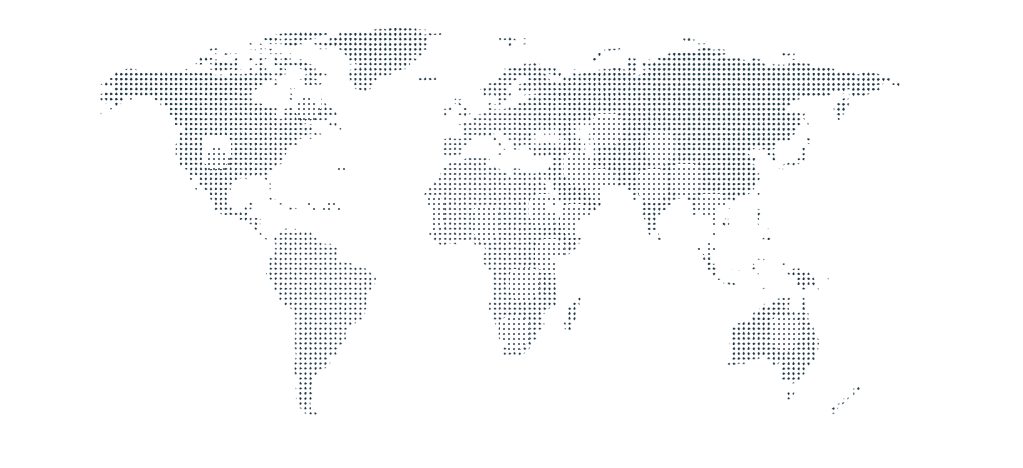
Shariah-compliant note reviews across four regionsWe have reviewed Shariah-compliant convertible and future equity instruments for entities in South Asia, Southeast Asia, Northern Africa and the Middle East, among others, both on our own methodology and on models proposed by others.
Our own modelSAFE-i was built from the ground up rather than adapted from an existing proposal, and it comes with a defined method for comparing outcomes against the conventional instrument.
Questions
We do not publish them. The capital contribution ratio, the valuation of the company's contribution and the two profit tiers all have to be set for your specific transaction, and a template completed without that modelling is exactly where these structures fail. Come to us with your terms, tell us what the investors and the founders each need, and we will model it.
It is a musharakah, deliberately so. The work is in the details that let it behave commercially like a SAFE: the capital contribution ratio fixed at the outset, the two tier profit mechanism that reproduces the economics of a valuation cap without guaranteeing anything, and the constructive liquidation route into equity.
Through Tier 2. Once the company's valuation crosses a pre-agreed threshold a higher profit share activates, and at any distribution the investor takes the greater of the two entitlements. In high growth scenarios the equity outcome tracks a conventional SAFE closely, which is something we model and show you rather than assert.
The investor bears loss in proportion to the capital contributed, as a partner. There is no liquidation preference and no capital guarantee. That is the point of difference from the conventional instrument and it cannot be negotiated away without breaking the structure.
By a defensible method agreed at the outset, for example cost to duplicate. The precise figure matters less than that it is fixed, documented and arrived at honestly, because the whole structure depends on the ratio being known before the money moves.
It depends on who is investing and what they require. Where an investor is looking for a Shariah-compliant company rather than only a compliant instrument, the conventional instruments already on the cap table come into the Shariah screening of the company itself. The answer can be yes or no, and it turns on that. Tell us the situation and we will tell you which it is.
Yes. Several models have been proposed in this market and we have reviewed notes built on them as well as on our own. We will say plainly where one does not hold.
Our certification confirms Shariah compliance. It is not an assessment of whether a business is viable, whether its financials are sound, or whether the people running it can execute. Look at both questions, and do your own due diligence on the second. Every ADL certificate carries a reference you can check independently.
Bring us your terms, whether you are a founder structuring a round or a fund reviewing an instrument already on the table.